


What Documents Do Lenders and Investors Need for Business Funding?
Securing business funding can be an important step toward expansion, working capital, equipment purchases, acquisitions, or other growth initiatives. However, lenders and investors need reliable information before deciding whether to provide capital. Understanding the business funding requirements in advance can make the process more organized and improve your readiness when an opportunity arises.
Why Funding Documents Matter
Funding providers use financial and business documents to evaluate your company’s financial health, repayment capacity, growth potential, and overall risk. Complete and accurate documentation also demonstrates that your business is professionally managed and prepared for the funding process.
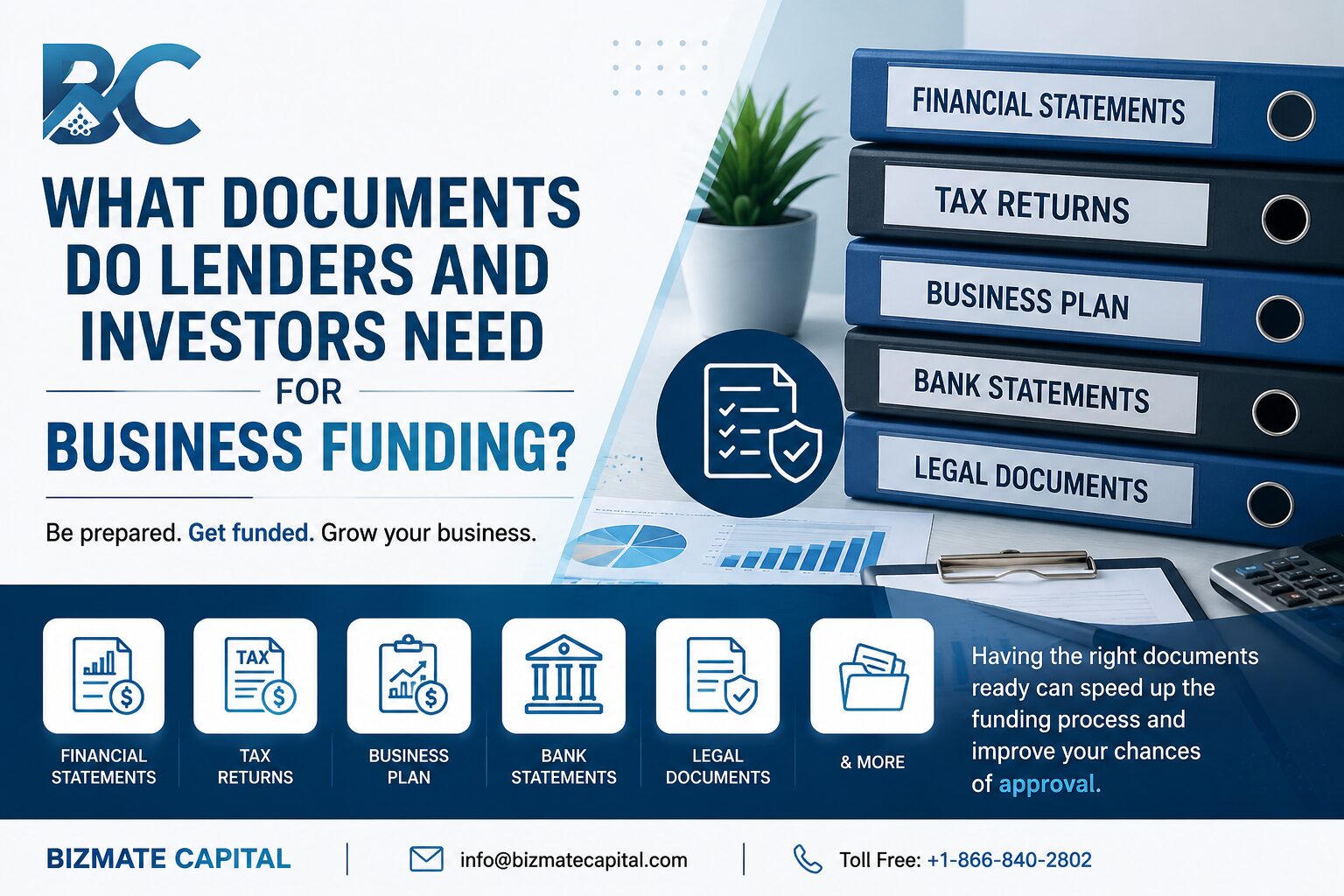
While requirements vary depending on the type of financing and funding provider, most businesses should be prepared to provide several key documents.
Financial Statements
Financial statements are among the most important documents requested during a funding review. These may include your profit and loss statements, balance sheets, and cash flow statements.
Lenders can use these records to understand revenue, expenses, assets, liabilities, and cash flow. Investors may also examine financial trends to determine whether the business has sustainable growth potential.
Business and Tax Returns
Recent business tax returns are commonly requested to verify reported income and assess financial performance. Depending on the funding structure, personal tax returns from business owners or guarantors may also be required.
Providing complete and consistent tax documentation can help reduce delays during the review process.
Business Plan and Funding Proposal
A clear business plan can help explain your company’s goals, market opportunity, competitive position, and growth strategy. If you are seeking capital for a specific purpose, a funding proposal should explain how much capital you need, how the funds will be used, and what outcomes you expect.
For investors, this information can provide important context around the company’s future potential.
Bank Statements and Cash Flow Information
Recent business bank statements can help funding providers verify cash flow and understand how money moves through the company. They may review deposits, operating expenses, existing debt payments, and available cash.
Strong and consistent cash flow can be particularly important when evaluating financing that requires regular repayment.
Legal and Business Documents
Businesses may also need to provide formation documents, ownership information, licenses, contracts, leases, existing loan agreements, and other relevant legal records. These documents help establish the company’s ownership structure and identify existing financial obligations.
Additional Documents for Due Diligence
Depending on the transaction, investors or lenders may request customer information, accounts receivable reports, debt schedules, financial projections, intellectual property records, or other supporting documents. Preparing these materials early can make due diligence more efficient.
Prepare Before You Apply
Knowing the business funding requirements before starting the application process can save time and help you respond quickly to funding opportunities. Keep your financial records current, organize important business documents, and clearly define your funding objectives. A well-prepared package can make it easier for funding professionals to understand your business and evaluate the opportunity.
If your business is looking for capital and you need guidance navigating the funding process, Bizmate Capital can help you understand your options and prepare for the next step. Contact Bizmate Capital at info@bizmatecapital.com or call Toll Free: +1-866-840-2802 to discuss your business funding needs.
 Previous Blog